 Family
Please donate here to help cure fluid on the heart!
 First of all , Robin Williams you will be missed, I feel so sorry that im in my own depressive mode AND think of ending it my self, im just learning this year just last month, people with money have problems too, we love you, may you now get the rest you deserve!! R.I.P


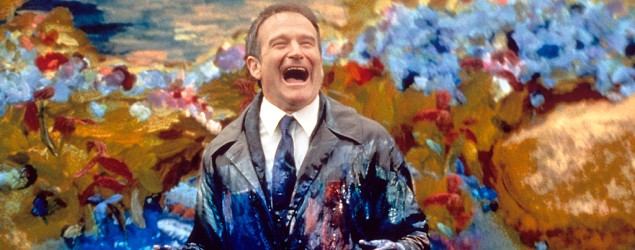
The Oscar-winning actor and comedian Robin Williams died Monday in California. He was 63.
"At this time, the Sheriff's Office Coroner Division suspects the death
to be a suicide due to asphyxia, but a comprehensive investigation must
be completed before a final determination is made," the Marin County
Coroner said in a statement. "A forensic examination is currently
scheduled for August 12, 2014 with subsequent toxicology testing to be
conducted."
"Robin Williams passed away this morning," the actor's rep Mara Buxbaum
added in a statement to ABC News. "He has been battling severe
depression of late. This is a tragic and sudden loss."
A few years later, he also began doing stand-up comedy and working in
television, before landing a star-making guest role as alien Mork in
"Happy Days." In 1978, he was given his own spin-off series, "Mork &
Mindy," for which he won a Golden Globe.
SLIDESHOW: Robin Williams' Best Roles
Robin Williams, in the Moment
Robin Williams Checks Into Rehab
Robin Williams Reprising His Role in 'Mrs. Doubtfire' Sequel
Around that time, Williams suffered a great loss: His friend, John
Belushi, died of a drug overdose in 1982, prompting Williams, who had
struggled with alcoholism and cocaine abuse, to quit, cold turkey.
(Williams also said that the birth of his son in 1983 made him rethink
things: "You realize, OK, now you have this responsibility, and [I]
dealt with it," he told Nightline in 2011.)
He would go on to make two trips to rehab, once in 2006, and again this
past July, which his rep told ABC News was "the opportunity to fine-tune
and focus on his continued commitment, of which he remains extremely
proud."
"It's [addiction] -- not caused by anything, it's just there," Williams
told "Good Morning America" in 2006. "It waits. It lays in wait for the
time when you think, 'It's fine now, I'm OK.' Then, the next thing you
know, it's not OK. Then you realize, 'Where am I? I didn't realize I was
in Cleveland.'"
Celebrities React to Death of Robin Williams on Twitter
Meanwhile, Williams discovered a passion for film in the '80s. With that
came a litany of awards, including a Golden Globe for his role in the
1988 film, "Good Morning, Vietnam," a Golden Globe for his 1993 film,
"Mrs. Doubtfire," and a Screen Actors Guild Award for 1996's, "The
Birdcage." In 1998, after three nominations, he won his first Oscar for
his role in "Good Will Hunting."
"This might be the one time I'm speechless!" he quipped while accepting the honor.
President Obama said in a statement on the actor's passing: "Robin
Williams was an airman, a doctor, a genie, a nanny, a president, a
professor, a bangarang Peter Pan, and everything in between. But he was
one of a kind. He arrived in our lives as an alien – but he ended up
touching every element of the human spirit. He made us laugh. He made us
cry. He gave his immeasurable talent freely and generously to those who
needed it most – from our troops stationed abroad to the marginalized
on our own streets."
Williams also had a rich personal life. In 1978, he married his first
wife, Valerie Velardi, with whom he had one son, Zachary, now 31. He and
Verlardi divorced in 1988, and the next year, he married Marsha Garces,
who had previously been a nanny to Zachary. He and Garces, from whom he
split in 2008, had two children, Zelda, now 25, and Cody, 23. Williams
married his third wife, graphic designer Susan Schenider, in 2011.
Recently, Williams had been hard at work. He starred in the CBS series,
"The Crazy Ones" and he recently finished filming several film projects,
including "Night at the Museum: Secret of the Tomb." He also recently
celebrated a birthday and, in his last Instagram post, wished his
daughter a happy 25th.
"#tbt and Happy Birthday to Ms. Zelda Rae Williams!" he wrote. "Quarter
of a century old today but always my baby girl. Happy Birthday
@zeldawilliams Love you!"
Robin Williams: 'I was shameful, did stuff that caused disgust – that's hard to recover from'
His
new film, World's Greatest Dad, is a glorious return to form. But a
mournful Robin Williams would rather talk about his battle with drugs
and alcohol – and recovering from heart surgery
In the normal order of things, an interview with a Hollywood actor
observes the form of a transaction. The actor wants to promote their
film, and ideally talk about little else – least of all anything of a
personal nature. The newspaper is mildly interested in the new film, but
hopes they can be tempted to talk about other matters – best of all
their private life. Sometimes the agreement is explicit, but most of the
time it is mutually understood, and so the interview tends to proceed
rather like a polite dance, with each party manoeuvring in its own
interests. On this occasion, however, the convention appears to have
been turned on its head.
Robin Williams's new film, World's Greatest Dad,
is brilliant. Having starred in a lot of unspeakably sentimental dross
in recent years, here he is at last in something clever and thoughtful; a
dark, slightly weird comedy that touches on all sorts of interesting
themes that I'm hoping he'll talk about. Williams, however, has other
plans. It is almost impossible to get anything coherent out of him about
the film, or any of the issues it raises. He is vague, tangential and
at times more or less incomprehensible – until the conversation turns to
more personal matters, at which point he becomes lucid and forthcoming.
What Williams really wants to talk about, it turns out, is his relapse
into alcoholism, his rehab and his open-heart surgery.
Unfortunately, it takes me some time to cotton on to this, so I keep asking questions about World's Greatest Dad. Williams plays Lance, a failed writer, failed teacher and single father of perhaps the most irredeemably dislikable teenager ever to appear on screen. His son Kyle is addicted to hardcore internet pornography and is almost universally loathed – until he accidentally dies. His father fakes a suicide note, and when it is leaked, the school magazine reprints the letter, its poignancy prompting a posthumous revision of everyone's former low opinion of the boy. Soon a juggernaut of confected grief is roaring out of control.
Unable to resist the allure of his new popularity, Lance proceeds to fake a whole journal, passing it off as his son's and fuelling the insatiable hunger for loss. A bidding war breaks out between publishing houses, the journal becomes a bestselling book, and Lance winds up on a daytime TV show, like a pseudo celebrity, peddling his mythical son's tragedy to the nation.
The film is a devastatingly funny indictment of the modern grief industry, but when I ask Williams if he thinks it's getting worse, he says mildly, "Well, I think people want it. In a weird way, it's trying to keep hope alive." So does he not share the film's judgment on mawkish sentimentality? "Well, you just try and keep it in perspective; you have to remember the best and the worst." It seems as if he's about to engage with the question – "In America they really do mythologise people when they die," he agrees – but then he veers off at a tangent, putting on Ronald Reagan's voice but talking about the ex-president in the third person: "Maybe he was kind of lovable, but you realised half way through his administration he really didn't know where he was."
I wonder if Williams had experienced a little bit of the film's theme himself, when his great friend Christopher Reeve died. Was it hard, I ask, to see fans mourning Superman, when to Williams he was a real person, a real friend?
"He was a friend," Williams says solemnly. "And also knowing him, especially after the accident and everything he went through – it was a weird thing." What was it like, I try again, to grieve privately for a public figure? "Well, it's a whole different game," he says, but then starts talking about the death of Reeve's wife a year later. "It happens all the time, I know, but I know their kids, they're amazing, and to see them go through so much loss in one year – that's tough."
I ask about the media's role in the manufacturing of grief, but instead he recalls a talkshow he saw where a man confessed to adultery before a female studio audience. "Idiot. Why don't you just go bobbing for piranha? These women are screaming 'You bastard!', but the idea of being on TV overrode everything." He adopts a southern redneck accent: "'Ah'm on TV, y'all.' You're a schmuck, why would you do that?" Then the accent again: "Ah'm on tee-vee, ah'm gonna be fay-mous.' Yeah, for all of five minutes, big time."
We're not making much headway on the grief industry, so I try internet porn. Williams's three children have grown up through the internet age, so I'm curious about his views on its impact on adolescents. "It's just like – there's everything you could ever think about online." But what does Williams actually think about it; is it liberating and a good thing, or corrupting and a bad thing? "It's an old thing," he shrugs. "Look at the walls of Pompeii. That's what got the internet started." Then he starts talking rather boringly about iPhones, and how it's now possible to do video-conference calls on a mobile.
My worry beforehand had been that Williams would be too wildly manic to make much sense. When he appeared on the Jonathan Ross show earlier this summer, he'd been vintage Williams – hyperactive to the point of deranged, ricocheting between voices, riffing off his internal dialogues. Off-camera, however, he is a different kettle of fish. His bearing is intensely Zen and almost mournful, and when he's not putting on voices he speaks in a low, tremulous baritone – as if on the verge of tears – that would work very well if he were delivering a funeral eulogy. He seems gentle and kind – even tender – but the overwhelming impression is one of sadness.
Even the detours into dialogue feel more like a reflex than irrepressible comic passion, and the freakish articulacy showcased in Good Morning Vietnam has gone. Quite often when he opens his mouth a slur of unrelated words come out, like a dozen different false starts tangled together, from which an actual sentence eventually finds its way out. For example, "So/Now/And then/Well/It/I – Sometimes I used to work just to work." It's like trying to tune into a long-wave radio station.
I find myself wondering if alcohol abuse might have something to do with it. Williams used to be a big-drinking cocaine addict, but quit both before the birth of his eldest son in 1983, and stayed sober for 20 years. On location in Alaska in 2003, however, he started drinking again. He brings this up himself, and the minute he does he becomes more engaged.
"I was in a small town where it's not the edge of the world, but you can see it from there, and then I thought: drinking. I just thought, hey, maybe drinking will help. Because I felt alone and afraid. It was that thing of working so much, and going fuck, maybe that will help. And it was the worst thing in the world." What did he feel like when he had his first drink? "You feel warm and kind of wonderful. And then the next thing you know, it's a problem, and you're isolated."
Some have suggested it was Reeve's death that turned him back to drink. "No," he says quietly, "it's more selfish than that. It's just literally being afraid. And you think, oh, this will ease the fear. And it doesn't." What was he afraid of? "Everything. It's just a general all-round arggghhh. It's fearfulness and anxiety."
He didn't take up cocaine again, because "I knew that would kill me". I'd have thought it would be a case of in for a penny – "In for a gram?" he smiles. "No. Cocaine – paranoid and impotent, what fun. There was no bit of me thinking, ooh, let's go back to that. Useless conversations until midnight, waking up at dawn feeling like a vampire on a day pass. No."
It only took a week of drinking before he knew he was in trouble, though. "For that first week you lie to yourself, and tell yourself you can stop, and then your body kicks back and says, no, stop later. And then it took about three years, and finally you do stop."
It wasn't, he says, fun while it lasted, but three years sounds like a long time not to be having fun. "That's right. Most of the time you just realise you've started to do embarrassing things." He recalls drinking at a charity auction hosted by Sharon Stone at Cannes: "And I realised I was pretty baked, and I look out and I see all of a sudden a wall of paparazzi. And I go, 'Oh well, I guess it's out now'."
In the end it was a family intervention that put him into residential rehab. I wonder if he was "Robin Williams" in rehab, and he agrees. "Yeah, you start off initially riffing, and kind of being real funny. But the weird thing is, how can you do a comic turn without betraying the precepts of group therapy? Eventually you shed it."
Williams still attends AA meetings at least once a week – "Have to. It's good to go" – and I suspect this accounts for a fair bit of his Zen solemnity. At times it verges on sentimental: he asks if I have children, and when I tell him I have a baby son he nods gravely, as if I've just shared. "Congrats. Good luck. It's a pretty wonderful thing." But it may well be down to the open-heart surgery he underwent early last year, when surgeons replaced his aortic valve with one from a pig.
"Oh, God, you find yourself getting emotional. It breaks through your barrier, you've literally cracked the armour. And you've got no choice, it literally breaks you open. And you feel really mortal." Does the intimation of mortality live with him still? "Totally." Is it a blessing? "Totally."
He takes everything, he says, more slowly now. His second marriage, to a film producer, ended in 2008 – largely because of his drinking, even though by then he was sober. "You know, I was shameful, and you do stuff that causes disgust, and that's hard to recover from. You can say, 'I forgive you' and all that stuff, but it's not the same as recovering from it. It's not coming back."
The couple had been together for 19 years, and have a son and a daughter, both now grown up; he has another son from his first marriage to an actress in the late 70s. Williams is now with a graphic designer, whom he met shortly before his heart surgery, and they live together in San Francisco. "But we're taking it slow. I don't know, maybe some day we'll marry, but there's no rush. I just want to take it easy now. This is good news. It's the whole thing of taking it slow. And it's so much better."
Williams thinks he used to be a fairly classic workaholic, but at 59 is now taking it slow professionally too. "In one two-year period I made eight movies. At one point the joke was that there's a movie out without you in it. You have this idea that you'd better keep working otherwise people will forget. And that was dangerous. And then you realise, no, actually if you take a break people might be more interested in you. Now, after the heart surgery, I'll take it slow."
Williams has been nothing if not prolific. After first finding fame in the late 70s as a kooky space alien in the sitcom Mork and Mindy, he became better known as a standup comedian, but his astonishing performance in Good Morning Vietnam earned him an Oscar nomination in 1988, with two more in the following five years, for Dead Poets' Society and The Fisher King. Mrs Doubtfire, in which he dragged up to play a nanny, brought wider mainstream success, and in 1998 Good Will Hunting finally won him an Oscar. In recent years, however, he has made an awful lot of what would politely be described as less critically acclaimed films.
Some of them have been downright awful; schmaltzy family comedies drenched in maudlin sentiment, such as the unwatchably saccharine Patch Adams or, even worse, Old Dogs. When I ask why he made them, he says: "Well, I've had a lot of people tell me they watched Old Dogs with their kids and had a good time." It didn't offend his sense of integrity? "No, it paid the bills. Sometimes you have to make a movie to make money." He didn't mistake them, he adds, for intelligent scripts: "You know what you're getting into, totally. You know they're going to make it goofy. And that's OK."
Like many people, I had always been confused by Williams's film choices. The sharpness of his early standup just seemed so incompatible with the sentimentality of his worst movies, and if, as Williams claims, Old Dogs simply paid the bills, he must have one very high-maintenance lifestyle. When I watched World's Greatest Dad I just assumed it echoed his own sensibility more accurately than all the other rubbish he has made. But actually, having met him, I'm not sure it does. I don't know whether it was rehab or heart surgery, but he seems to have arrived at a place where sentimentality can sit quite easily.
I ask if he feels happier now, and he says softly, "I think so. And not afraid to be unhappy. That's OK too. And then you can be like, all is good. And that is the thing, that is the gift."
World's Greatest Dad is released on 24 September
San Rafael, Calif. — Investigators here said today Oscar-winning actor Robin Williams's death was a suicide by hanging: He was found dead in his bedroom, clothed, slightly suspended in a seated position with a leather belt around his neck, with one end wedged between a closet door and door frame.
At a press conference, Lt. Keith Boyd, assistant chief deputy coroner for Marin County, Calif., said he was cold to the touch and rigor mortis had already set in.
Williams was found by his personal assistant, who broke in to his room Monday morning when he failed to respond to knocks. She was distraught in the 911 call and indicated Williams' death was a suicide by hanging.
Williams' wife last saw him at about 10:30 pm the night before; she left the house Monday around 10:30 am thinking he was still asleep in his room.
Neighbor Sandy Kleinman said yesterday that she saw his wife go out with the dog for a walk "in the morning."
Boyd said some superficial cuts were found on the inside of Williams' left wrist, and a pocket knife was found nearby. It is being tested to determine if residue on the knife is blood and if it is Williams' blood.
"The preliminary, and I again say preliminary, result of the forensic examination reveals supporting signs that Mr Williams life ended from asphyxia due to hanging," Boyd said.
Boyd
would not say whether a suicide note was found. Nor would he discuss
medications; toxicology reports won't be available for several weeks, he
said. But he did say Williams had recently sought treatment for
depression.
Boyd said today's forensic examination, conducted by the Marin County Sheriff's Office chief forensic pathologist, "did not reveal any injuries indicating that Williams had been in a struggle or any altercation" prior to death.
The body is no longer in the county's custody but Boyd would not discuss funeral arrangements, saying they were up to the family. So far, the family, including Williams' widow, has pleaded for privacy.
His family has not released any information about a funeral but late Tuesday asked that in lieu of flowers donations be made to these charities: St Jude Children's Research Hospital, Challenged Athletes, Christopher and Dana Reeve Foundation, Glide Memorial Church in San Francisco, Muhammad Ali Parkinson Foundation, and the USO.
That's going to be difficult given the worldwide interest in the story. Already, mourners are turning up on the quiet bayside street in Tiburon where Williams lived.
Such as fans Sabrina Hahnlein, 55, and her daughter Kathryn, 23, of San Diego, who found their way to his home to leave a bouquet of flowers and pay their respects. They loved Williams work so much they named their two dogs after his first big breakthrough: Mork and Mindy.
 The star was
found dead at his home in Tiburon, Calif. Monday, leaving Hollywood and
the comedian's many fans in a state of shock. Williams, 63, was found
unconscious and not breathing at approximately noon local time, and was
pronounced dead shortly after.
The star was
found dead at his home in Tiburon, Calif. Monday, leaving Hollywood and
the comedian's many fans in a state of shock. Williams, 63, was found
unconscious and not breathing at approximately noon local time, and was
pronounced dead shortly after.
Williams' daughter, Zelda, 25, who is shown as a baby in the final post on the actor's Instagram account, tweeted early Tuesday morning, "I love you. I miss you. I'll try to keep looking up."
His wife, Susan Schneider, issued a brief statement on Monday: "This morning, I lost my husband and my best friend, while the world lost one of its most beloved artists and beautiful human beings. I am utterly heartbroken."
The shock from Williams' death continued to reverberate throughout the culture, even the world. Some fans reacted today with touching tributes.
Boston fans chalked tributes and the words that Williams spoke in Good Will Hunting around the bench where he and Matt Damon
filmed a scene for the movie, creating a singular memorial. Chalk
footprints of where Williams sat were drawn on the bench, right above
famous quotes from the movie, such as "Your move, chief."
At Los Angeles' Laugh Factory on Sunset Boulevard, the marquee read: "Robin Williams Rest In Peace Make God Laugh."
Many of Williams' co-stars and Hollywood contemporaries expressed their shock and grief, too, via statements and social media.
One constant theme: No matter his demons, Williams was a good guy — warm, sweet, generous, compassionate, humane.
Stage superstar Nathan Lane, who co-starred with Williams in the film The Birdcage, said Williams once made him laugh so hard he cried, and on Monday he cried again at the thought that he was gone.
"What I will always remember about Robin, perhaps even more than his comic genius, extraordinary talent and astounding intellect, was his huge heart — his tremendous kindness, generosity, and compassion as an acting partner, colleague, and fellow traveler in a difficult world," Lane said in a statement.
On Monday, President Obama paid tribute. Today, Secretary of State John Kerry praised Williams' "extraordinary zest."
"Robin wasn't just a huge creative genius, but a caring, involved citizen," Kerry said in a statement. "I'll always be grateful for his personal friendship and his support for the causes that we both cared about deeply."
Alan Alda, in a tribute published on TIME.com, called Williams a "Niagara of wit," adding that his death made him want to do something.
"I hope it makes us all want to do something," Alda wrote."While the whole country, and much of the world, feels this moment of sadness at his death, can we turn the loss of this artist we loved so much into something that pushes back against the ravages of despair?"
"I feel stunned and so sad about Robin," his Mrs. Doubtfire co-star Sally Field told Entertainment Tonight in a statement. "I'm sad for the world of comedy. And so very sad for his family. And I'm sad for Robin. He always lit up when he was able to make people laugh, and he made them laugh his whole life long ... tirelessly. He was one of a kind. There will not be another. Please God, let him now rest in peace."
On the Today show Tuesday morning, Inside the Actors Studio host James Lipton called Williams a "genius."
"His gift ... was genius. Geniuses can do things we have to learn to do. ... You can teach craft, you can teach technique. You can't teach genius. He had genius."
Steve Martin tweeted, "I could not be more stunned by the loss of Robin Williams, mensch, great talent, acting partner, genuine soul."
Sarah Michelle Gellar, who starred with Williams on CBS' The Crazy Ones, remembers her co-star as a friend who became family.
"My life is a better place because I knew Robin Williams," she told People. "To my children he was Uncle Robin, to everyone he worked with, he was the best boss anyone had ever known, and to me he was not just an inspiration but he was the father I had always dreamed of having. There are not enough adjectives to describe the light he was, to anyone that ever had the pleasure to meet him. I will miss him every day, but I know the memory of him will live on. And to his family, I thank them for letting us know him and seeing the joy they brought him. Us crazy ones love you."

Unfortunately, it takes me some time to cotton on to this, so I keep asking questions about World's Greatest Dad. Williams plays Lance, a failed writer, failed teacher and single father of perhaps the most irredeemably dislikable teenager ever to appear on screen. His son Kyle is addicted to hardcore internet pornography and is almost universally loathed – until he accidentally dies. His father fakes a suicide note, and when it is leaked, the school magazine reprints the letter, its poignancy prompting a posthumous revision of everyone's former low opinion of the boy. Soon a juggernaut of confected grief is roaring out of control.
Unable to resist the allure of his new popularity, Lance proceeds to fake a whole journal, passing it off as his son's and fuelling the insatiable hunger for loss. A bidding war breaks out between publishing houses, the journal becomes a bestselling book, and Lance winds up on a daytime TV show, like a pseudo celebrity, peddling his mythical son's tragedy to the nation.
The film is a devastatingly funny indictment of the modern grief industry, but when I ask Williams if he thinks it's getting worse, he says mildly, "Well, I think people want it. In a weird way, it's trying to keep hope alive." So does he not share the film's judgment on mawkish sentimentality? "Well, you just try and keep it in perspective; you have to remember the best and the worst." It seems as if he's about to engage with the question – "In America they really do mythologise people when they die," he agrees – but then he veers off at a tangent, putting on Ronald Reagan's voice but talking about the ex-president in the third person: "Maybe he was kind of lovable, but you realised half way through his administration he really didn't know where he was."
I wonder if Williams had experienced a little bit of the film's theme himself, when his great friend Christopher Reeve died. Was it hard, I ask, to see fans mourning Superman, when to Williams he was a real person, a real friend?
"He was a friend," Williams says solemnly. "And also knowing him, especially after the accident and everything he went through – it was a weird thing." What was it like, I try again, to grieve privately for a public figure? "Well, it's a whole different game," he says, but then starts talking about the death of Reeve's wife a year later. "It happens all the time, I know, but I know their kids, they're amazing, and to see them go through so much loss in one year – that's tough."
I ask about the media's role in the manufacturing of grief, but instead he recalls a talkshow he saw where a man confessed to adultery before a female studio audience. "Idiot. Why don't you just go bobbing for piranha? These women are screaming 'You bastard!', but the idea of being on TV overrode everything." He adopts a southern redneck accent: "'Ah'm on TV, y'all.' You're a schmuck, why would you do that?" Then the accent again: "Ah'm on tee-vee, ah'm gonna be fay-mous.' Yeah, for all of five minutes, big time."
We're not making much headway on the grief industry, so I try internet porn. Williams's three children have grown up through the internet age, so I'm curious about his views on its impact on adolescents. "It's just like – there's everything you could ever think about online." But what does Williams actually think about it; is it liberating and a good thing, or corrupting and a bad thing? "It's an old thing," he shrugs. "Look at the walls of Pompeii. That's what got the internet started." Then he starts talking rather boringly about iPhones, and how it's now possible to do video-conference calls on a mobile.
My worry beforehand had been that Williams would be too wildly manic to make much sense. When he appeared on the Jonathan Ross show earlier this summer, he'd been vintage Williams – hyperactive to the point of deranged, ricocheting between voices, riffing off his internal dialogues. Off-camera, however, he is a different kettle of fish. His bearing is intensely Zen and almost mournful, and when he's not putting on voices he speaks in a low, tremulous baritone – as if on the verge of tears – that would work very well if he were delivering a funeral eulogy. He seems gentle and kind – even tender – but the overwhelming impression is one of sadness.
Even the detours into dialogue feel more like a reflex than irrepressible comic passion, and the freakish articulacy showcased in Good Morning Vietnam has gone. Quite often when he opens his mouth a slur of unrelated words come out, like a dozen different false starts tangled together, from which an actual sentence eventually finds its way out. For example, "So/Now/And then/Well/It/I – Sometimes I used to work just to work." It's like trying to tune into a long-wave radio station.
I find myself wondering if alcohol abuse might have something to do with it. Williams used to be a big-drinking cocaine addict, but quit both before the birth of his eldest son in 1983, and stayed sober for 20 years. On location in Alaska in 2003, however, he started drinking again. He brings this up himself, and the minute he does he becomes more engaged.
"I was in a small town where it's not the edge of the world, but you can see it from there, and then I thought: drinking. I just thought, hey, maybe drinking will help. Because I felt alone and afraid. It was that thing of working so much, and going fuck, maybe that will help. And it was the worst thing in the world." What did he feel like when he had his first drink? "You feel warm and kind of wonderful. And then the next thing you know, it's a problem, and you're isolated."
Some have suggested it was Reeve's death that turned him back to drink. "No," he says quietly, "it's more selfish than that. It's just literally being afraid. And you think, oh, this will ease the fear. And it doesn't." What was he afraid of? "Everything. It's just a general all-round arggghhh. It's fearfulness and anxiety."
He didn't take up cocaine again, because "I knew that would kill me". I'd have thought it would be a case of in for a penny – "In for a gram?" he smiles. "No. Cocaine – paranoid and impotent, what fun. There was no bit of me thinking, ooh, let's go back to that. Useless conversations until midnight, waking up at dawn feeling like a vampire on a day pass. No."
It only took a week of drinking before he knew he was in trouble, though. "For that first week you lie to yourself, and tell yourself you can stop, and then your body kicks back and says, no, stop later. And then it took about three years, and finally you do stop."
It wasn't, he says, fun while it lasted, but three years sounds like a long time not to be having fun. "That's right. Most of the time you just realise you've started to do embarrassing things." He recalls drinking at a charity auction hosted by Sharon Stone at Cannes: "And I realised I was pretty baked, and I look out and I see all of a sudden a wall of paparazzi. And I go, 'Oh well, I guess it's out now'."
In the end it was a family intervention that put him into residential rehab. I wonder if he was "Robin Williams" in rehab, and he agrees. "Yeah, you start off initially riffing, and kind of being real funny. But the weird thing is, how can you do a comic turn without betraying the precepts of group therapy? Eventually you shed it."
Williams still attends AA meetings at least once a week – "Have to. It's good to go" – and I suspect this accounts for a fair bit of his Zen solemnity. At times it verges on sentimental: he asks if I have children, and when I tell him I have a baby son he nods gravely, as if I've just shared. "Congrats. Good luck. It's a pretty wonderful thing." But it may well be down to the open-heart surgery he underwent early last year, when surgeons replaced his aortic valve with one from a pig.
"Oh, God, you find yourself getting emotional. It breaks through your barrier, you've literally cracked the armour. And you've got no choice, it literally breaks you open. And you feel really mortal." Does the intimation of mortality live with him still? "Totally." Is it a blessing? "Totally."
He takes everything, he says, more slowly now. His second marriage, to a film producer, ended in 2008 – largely because of his drinking, even though by then he was sober. "You know, I was shameful, and you do stuff that causes disgust, and that's hard to recover from. You can say, 'I forgive you' and all that stuff, but it's not the same as recovering from it. It's not coming back."
The couple had been together for 19 years, and have a son and a daughter, both now grown up; he has another son from his first marriage to an actress in the late 70s. Williams is now with a graphic designer, whom he met shortly before his heart surgery, and they live together in San Francisco. "But we're taking it slow. I don't know, maybe some day we'll marry, but there's no rush. I just want to take it easy now. This is good news. It's the whole thing of taking it slow. And it's so much better."
Williams thinks he used to be a fairly classic workaholic, but at 59 is now taking it slow professionally too. "In one two-year period I made eight movies. At one point the joke was that there's a movie out without you in it. You have this idea that you'd better keep working otherwise people will forget. And that was dangerous. And then you realise, no, actually if you take a break people might be more interested in you. Now, after the heart surgery, I'll take it slow."
Williams has been nothing if not prolific. After first finding fame in the late 70s as a kooky space alien in the sitcom Mork and Mindy, he became better known as a standup comedian, but his astonishing performance in Good Morning Vietnam earned him an Oscar nomination in 1988, with two more in the following five years, for Dead Poets' Society and The Fisher King. Mrs Doubtfire, in which he dragged up to play a nanny, brought wider mainstream success, and in 1998 Good Will Hunting finally won him an Oscar. In recent years, however, he has made an awful lot of what would politely be described as less critically acclaimed films.
Some of them have been downright awful; schmaltzy family comedies drenched in maudlin sentiment, such as the unwatchably saccharine Patch Adams or, even worse, Old Dogs. When I ask why he made them, he says: "Well, I've had a lot of people tell me they watched Old Dogs with their kids and had a good time." It didn't offend his sense of integrity? "No, it paid the bills. Sometimes you have to make a movie to make money." He didn't mistake them, he adds, for intelligent scripts: "You know what you're getting into, totally. You know they're going to make it goofy. And that's OK."
Like many people, I had always been confused by Williams's film choices. The sharpness of his early standup just seemed so incompatible with the sentimentality of his worst movies, and if, as Williams claims, Old Dogs simply paid the bills, he must have one very high-maintenance lifestyle. When I watched World's Greatest Dad I just assumed it echoed his own sensibility more accurately than all the other rubbish he has made. But actually, having met him, I'm not sure it does. I don't know whether it was rehab or heart surgery, but he seems to have arrived at a place where sentimentality can sit quite easily.
I ask if he feels happier now, and he says softly, "I think so. And not afraid to be unhappy. That's OK too. And then you can be like, all is good. And that is the thing, that is the gift."
World's Greatest Dad is released on 24 September
San Rafael, Calif. — Investigators here said today Oscar-winning actor Robin Williams's death was a suicide by hanging: He was found dead in his bedroom, clothed, slightly suspended in a seated position with a leather belt around his neck, with one end wedged between a closet door and door frame.
At a press conference, Lt. Keith Boyd, assistant chief deputy coroner for Marin County, Calif., said he was cold to the touch and rigor mortis had already set in.
Williams was found by his personal assistant, who broke in to his room Monday morning when he failed to respond to knocks. She was distraught in the 911 call and indicated Williams' death was a suicide by hanging.
Williams' wife last saw him at about 10:30 pm the night before; she left the house Monday around 10:30 am thinking he was still asleep in his room.
Neighbor Sandy Kleinman said yesterday that she saw his wife go out with the dog for a walk "in the morning."
Boyd said some superficial cuts were found on the inside of Williams' left wrist, and a pocket knife was found nearby. It is being tested to determine if residue on the knife is blood and if it is Williams' blood.
"The preliminary, and I again say preliminary, result of the forensic examination reveals supporting signs that Mr Williams life ended from asphyxia due to hanging," Boyd said.
Boyd said today's forensic examination, conducted by the Marin County Sheriff's Office chief forensic pathologist, "did not reveal any injuries indicating that Williams had been in a struggle or any altercation" prior to death.
The body is no longer in the county's custody but Boyd would not discuss funeral arrangements, saying they were up to the family. So far, the family, including Williams' widow, has pleaded for privacy.
His family has not released any information about a funeral but late Tuesday asked that in lieu of flowers donations be made to these charities: St Jude Children's Research Hospital, Challenged Athletes, Christopher and Dana Reeve Foundation, Glide Memorial Church in San Francisco, Muhammad Ali Parkinson Foundation, and the USO.
That's going to be difficult given the worldwide interest in the story. Already, mourners are turning up on the quiet bayside street in Tiburon where Williams lived.
Such as fans Sabrina Hahnlein, 55, and her daughter Kathryn, 23, of San Diego, who found their way to his home to leave a bouquet of flowers and pay their respects. They loved Williams work so much they named their two dogs after his first big breakthrough: Mork and Mindy.
Oscar-winning actor and comedian Robin Williams was found dead at 63
Monday of an apparent suicide. In his four decades in Hollywood he left
an indelible mark on pop culture.
VPC
Williams' daughter, Zelda, 25, who is shown as a baby in the final post on the actor's Instagram account, tweeted early Tuesday morning, "I love you. I miss you. I'll try to keep looking up."
His wife, Susan Schneider, issued a brief statement on Monday: "This morning, I lost my husband and my best friend, while the world lost one of its most beloved artists and beautiful human beings. I am utterly heartbroken."
The shock from Williams' death continued to reverberate throughout the culture, even the world. Some fans reacted today with touching tributes.
At Los Angeles' Laugh Factory on Sunset Boulevard, the marquee read: "Robin Williams Rest In Peace Make God Laugh."
Many of Williams' co-stars and Hollywood contemporaries expressed their shock and grief, too, via statements and social media.
One constant theme: No matter his demons, Williams was a good guy — warm, sweet, generous, compassionate, humane.
Stage superstar Nathan Lane, who co-starred with Williams in the film The Birdcage, said Williams once made him laugh so hard he cried, and on Monday he cried again at the thought that he was gone.
"What I will always remember about Robin, perhaps even more than his comic genius, extraordinary talent and astounding intellect, was his huge heart — his tremendous kindness, generosity, and compassion as an acting partner, colleague, and fellow traveler in a difficult world," Lane said in a statement.
On Monday, President Obama paid tribute. Today, Secretary of State John Kerry praised Williams' "extraordinary zest."
"Robin wasn't just a huge creative genius, but a caring, involved citizen," Kerry said in a statement. "I'll always be grateful for his personal friendship and his support for the causes that we both cared about deeply."
Alan Alda, in a tribute published on TIME.com, called Williams a "Niagara of wit," adding that his death made him want to do something.
"I hope it makes us all want to do something," Alda wrote."While the whole country, and much of the world, feels this moment of sadness at his death, can we turn the loss of this artist we loved so much into something that pushes back against the ravages of despair?"
"I feel stunned and so sad about Robin," his Mrs. Doubtfire co-star Sally Field told Entertainment Tonight in a statement. "I'm sad for the world of comedy. And so very sad for his family. And I'm sad for Robin. He always lit up when he was able to make people laugh, and he made them laugh his whole life long ... tirelessly. He was one of a kind. There will not be another. Please God, let him now rest in peace."
On the Today show Tuesday morning, Inside the Actors Studio host James Lipton called Williams a "genius."
"His gift ... was genius. Geniuses can do things we have to learn to do. ... You can teach craft, you can teach technique. You can't teach genius. He had genius."
Sarah Michelle Gellar, who starred with Williams on CBS' The Crazy Ones, remembers her co-star as a friend who became family.
"My life is a better place because I knew Robin Williams," she told People. "To my children he was Uncle Robin, to everyone he worked with, he was the best boss anyone had ever known, and to me he was not just an inspiration but he was the father I had always dreamed of having. There are not enough adjectives to describe the light he was, to anyone that ever had the pleasure to meet him. I will miss him every day, but I know the memory of him will live on. And to his family, I thank them for letting us know him and seeing the joy they brought him. Us crazy ones love you."
Meryl Streep, interviewed by Matt Lauer on Today, called Williams a "generous soul."
"It's hard to imagine unstoppable energy stopped," she said.
The family of the late Superman actor Christopher Reeve, who was Williams' roommate at Juilliard in the early 1970s, recalled that Williams helped Reeve cope after he was paralyzed in a horse-riding accident in 1995. Reeve died in 2004.
"After our father's accident, Robin's visit to his hospital room was the first time that Dad truly laughed," the family said in a statement to People. "Dad later said, 'My old friend had helped me know that somehow I was going to be okay.' "


